QUIC and multipath
Multipath extension for QUIC; applicability and manageability of QUIC; multipath QUIC for access traffic steering, switching and splitting in 5G Advanced.
Ericsson Research · IRTF maprg co-chair · former IAB Chair
Short bio
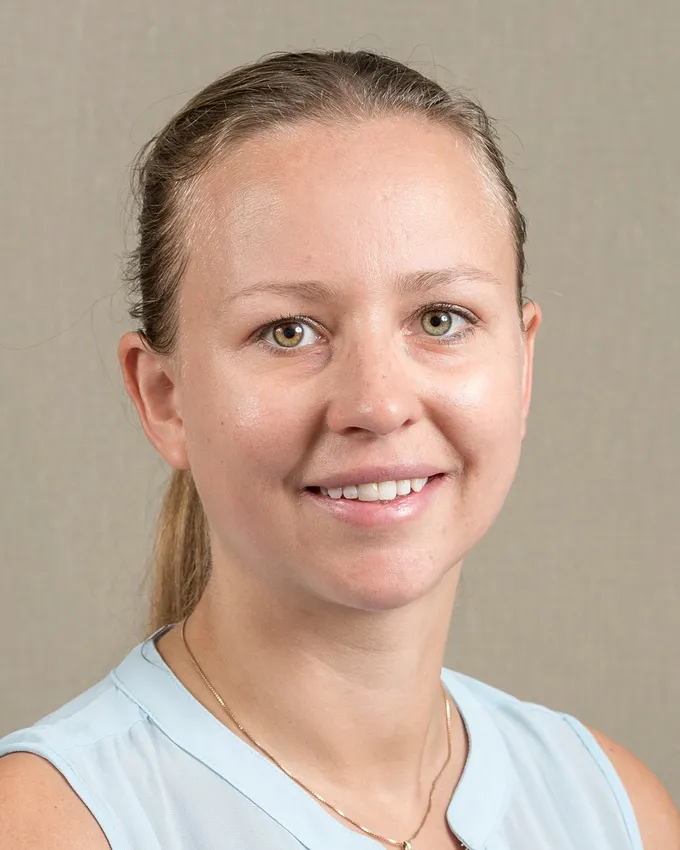
Mirja Kühlewind has been working since March 2019 at Ericsson Research Eurolab in Herzogenrath near Aachen in Germany. Before that, starting July 2014, she worked as a post-doctoral researcher at the Networked Systems Group (NSG) of the Computer Engineering and Networks Laboratory at ETH Zurich. She received her PhD from the University of Stuttgart, Germany, in 2015, working as a researcher at the Institute of Communication Networks and Computer Engineering (IKR) from 2009 to 2014, and her diploma degree in 2009 in Communication and Information Technologies from the Friedrich-Alexander University Erlangen-Nuremberg, Germany. At ETH she was also the project coordinator of the EU H2020 project Measurement and Architecture for a Middleboxed Internet (MAMI), which has triggered follow-up work in the IETF.
At Ericsson, Mirja works foremost on the design of transport protocols with a focus on congestion control, as well as on Internet measurements investigating the deployability of new protocols or protocol extensions.
Mirja served on the Internet Architecture Board (IAB) of the Internet Engineering Task Force (IETF) from March 2020 to March 2026 and was IAB Chair from 2020 to 2024. Before that she served four years as Area Director (AD) of the transport area on the Internet Engineering Steering Group (IESG). She is an author of twenty RFCs, including RFC 6817 on Low Extra Delay Background Transport (LEDBAT), RFC 7786 and RFC 7837 on Congestion Exposure (ConEx), and RFC 9768 on More Accurate ECN Feedback (AccECN). She is co-chair of the Measurement and Analysis for Protocols Research Group (maprg) in the Internet Research Task Force (IRTF).
Research
Multipath extension for QUIC; applicability and manageability of QUIC; multipath QUIC for access traffic steering, switching and splitting in 5G Advanced.
Proxying IP and UDP in HTTP, multi-hop MASQUE, stream-aware scheduling for QUIC-based proxying over multiple paths, privacy partitioning.
Accurate ECN feedback, LEDBAT, Congestion Exposure (ConEx), SCReAM, TCP SIAD, TCP CUBIC in low-delay cellular networks.
Path signals between endpoints and the network, throughput advice (SCONE), on-path explicit measurement, the wire image of a protocol.
Path transparency, deployability of protocol extensions, passive latency measurement; co-chair of the IRTF Measurement and Analysis for Protocols Research Group.
Auditing agent delegation and interactions, crawler best practices, AI agent discovery.
Career
Master Researcher, Networks. Transport protocol design with a focus on congestion control, and Internet measurements on the deployability of new protocols and extensions.
Member for six years, IAB Chair 2020 – 2024 and as such ex-officio member of the IESG. Program committee member of the IAB workshops on COVID-19 Network Impacts (2020), Analyzing IETF Data (2021) and Barriers to Internet Access of Services (2024), and co-author of their reports. IESG liaison to the IAB 2019 – 2020.
Four years on the Internet Engineering Steering Group (IESG), April 2016 to March 2020, responsible area director for working groups including TCPM, MPTCP, AQM, TCPINC and RMCAT.
Postdoctoral researcher at the Computer Engineering and Networks Laboratory (TIK). Coordinator of the EU H2020 project MAMI, Measurement and Architecture for a Middleboxed Internet.
Researcher at the Institute of Communication Networks and Computer Engineering (IKR); PhD 2015 with the thesis Scalable Increase Adaptive Decrease: congestion control supporting low latency and high speed (published 2016). Co-chair of the IETF rmcat working group from 2012.
Diploma degree in Communication and Information Technologies.
IETF
From the RFC Editor's index. Internet-Drafts in progress and the IETF roles are on the IETF page.
Talks
Press & writing
Conference and workshop papers, journal articles, technical reports and the dissertation, 2010 – 2026, by year.
ServiceProgramme committees (IMC, PAM, TMA, ANRW and others), workshop chairs and reviewing since 2011.
CodeECN SYN fallback, Accurate ECN, TCP SIAD, LEDBAT and helper sysctls.